
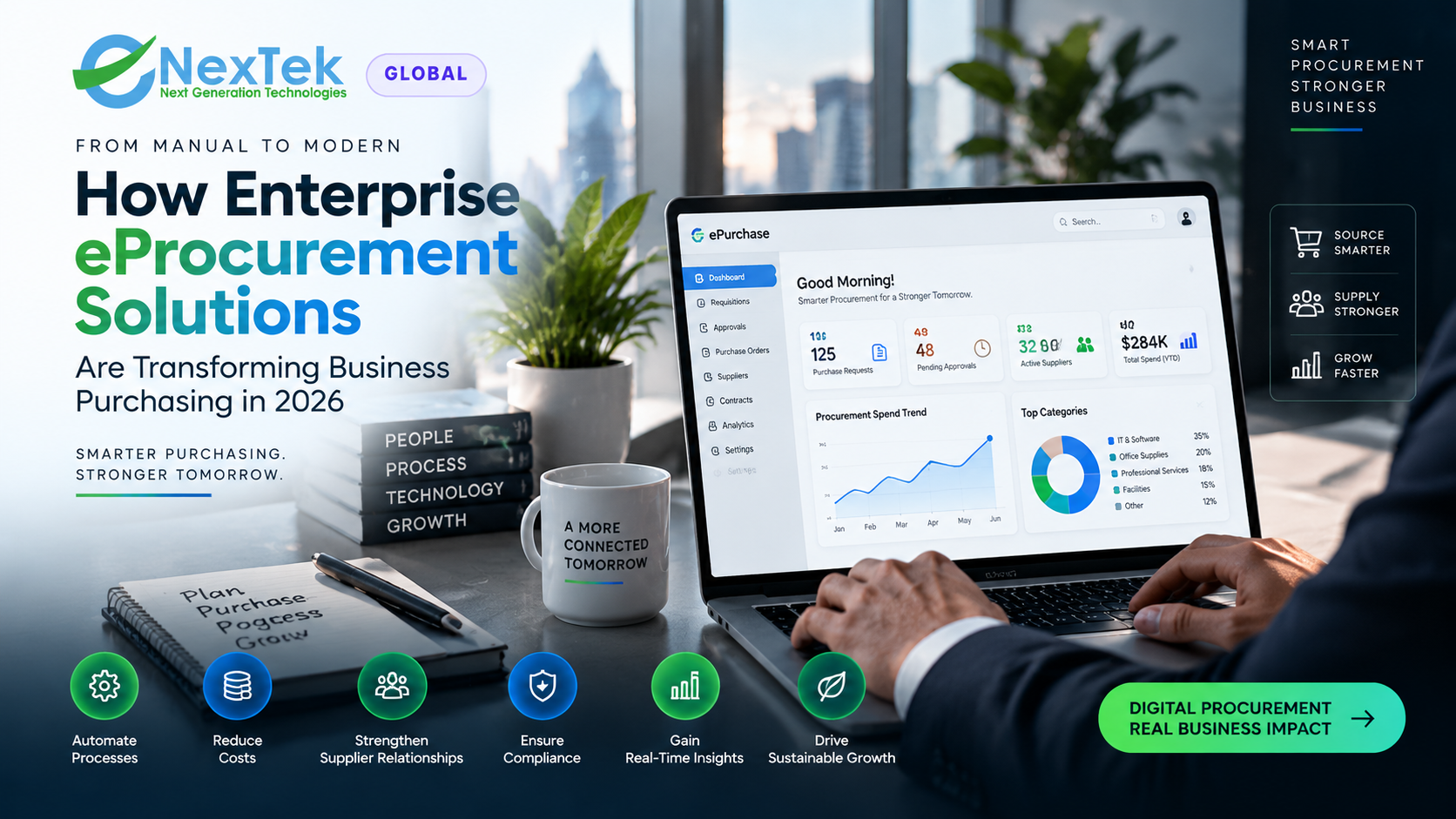
The way businesses purchase products, manage suppliers, and control spending has changed dramatically. Traditional procurement methods that rely on spreadsheets, emails, manual approvals, and disconnected systems are no longer efficient enough for modern organizations.
Today’s businesses need smarter, faster, and more transparent purchasing systems that can support growth while reducing operational complexity. This is where eProcurement solutions are becoming a critical part of digital transformation strategies.
Organizations across industries are adopting digital procurement platforms to streamline purchasing workflows, improve supplier relationships, increase visibility, and make better data-driven decisions.
A modern eProcurement platform does much more than replace paper-based purchasing. It creates a connected ecosystem where employees, suppliers, finance teams, and decision-makers can collaborate efficiently.
Businesses looking to modernize their purchasing processes can explore advanced solutions through ePurchase, designed to simplify procurement operations and support smarter business growth.
Table of Contents
What Is eProcurement and Why Does It Matter?
eProcurement, or electronic procurement, refers to the use of digital technology to manage the purchasing lifecycle — from identifying business needs to ordering products, approving purchases, receiving goods, and processing payments.
Unlike traditional procurement methods, eProcurement provides organizations with:
- Automated purchasing workflows
- Centralized supplier management
- Real-time spending visibility
- Digital approval processes
- Improved compliance controls
- Better cost management
For growing companies, procurement efficiency can directly impact profitability.
A small delay in purchasing approval, supplier communication, or inventory management can create unnecessary costs. eProcurement helps eliminate these bottlenecks by creating a faster and more organized purchasing environment.
The Biggest Challenges of Traditional Procurement
Many businesses still rely on outdated procurement processes. While these methods may have worked in the past, they create significant challenges in today’s competitive environment.
1. Lack of Spending Visibility
Without a centralized procurement system, businesses often struggle to understand:
- Where money is being spent
- Which suppliers provide the best value
- Where unnecessary expenses exist
- How purchasing decisions impact budgets
A digital procurement solution provides detailed insights that help leaders make smarter financial decisions.
2. Manual Approval Processes
Traditional procurement often involves long email chains and manual paperwork.
A simple purchase request may require multiple approvals, causing delays that impact productivity.
Automated workflows allow organizations to:
- Route requests automatically
- Set approval rules
- Track purchase status
- Reduce administrative workload
This allows teams to focus on strategic activities rather than repetitive tasks.
3. Supplier Management Difficulties
Managing multiple suppliers manually can become complicated.
Businesses need efficient ways to:
- Compare supplier performance
- Maintain supplier information
- Monitor contracts
- Improve supplier relationships
Modern eProcurement platforms create a single source of truth for supplier data and purchasing activities.
Key Benefits of Implementing an eProcurement Solution
Investing in digital procurement technology provides measurable advantages for businesses of all sizes.
1. Improved Operational Efficiency
Automation removes unnecessary manual steps from procurement workflows.
Employees can quickly search approved suppliers, create purchase requests, and complete transactions without unnecessary delays.
This improves productivity across departments.
2. Reduced Procurement Costs
A major advantage of eProcurement is better cost control.
Organizations can identify:
- Duplicate purchases
- Unauthorized spending
- Inefficient suppliers
- Contract opportunities
With better visibility, businesses can negotiate stronger supplier agreements and reduce operational expenses.
3. Better Compliance and Control
Procurement compliance is essential, especially for larger organizations.
eProcurement systems help enforce purchasing policies by ensuring:
- Approved suppliers are used
- Spending limits are followed
- Approval processes are maintained
- Transactions are properly recorded
This reduces financial risk and improves accountability.
4. Data-Driven Decision Making
Modern procurement is no longer just about buying products.
It is about understanding purchasing patterns and using insights to improve business performance.
Analytics from eProcurement systems can help answer important questions:
- Which suppliers deliver the best value?
- Which departments spend the most?
- Where can costs be optimized?
- What purchasing trends are emerging?
Data-driven procurement allows businesses to become more strategic.
How eProcurement Supports Digital Transformation
Digital transformation is not simply about adopting new technology. It is about creating smarter ways of working.
Procurement is one of the most important areas where businesses can achieve immediate improvements.
By connecting procurement with other business systems such as:
- Enterprise resource planning (ERP)
- Financial management platforms
- Inventory systems
- Supplier networks
- Analytics tools
organizations create a more connected digital ecosystem.
This enables faster decisions, improved collaboration, and stronger business agility.
The Future of Procurement: AI, Automation, and Intelligent Purchasing
The next generation of procurement will be powered by artificial intelligence and automation.
Future-ready procurement platforms will help organizations:
Predict Purchasing Needs
AI can analyze historical purchasing patterns and forecast future demand.
Identify Savings Opportunities
Intelligent analytics can highlight areas where businesses can reduce unnecessary spending.
Improve Supplier Selection
AI-driven recommendations can help organizations evaluate suppliers based on performance, pricing, reliability, and risk.
Automate Routine Decisions
Low-value repetitive purchases can be automated, allowing procurement teams to focus on strategic supplier relationships.
The future of procurement is not just digital it is intelligent.
Why Businesses Should Invest in eProcurement Now
Companies that delay procurement modernization risk falling behind competitors who already benefit from automation and better data visibility.
The organizations leading the market are not necessarily those with the largest budgets.
They are the companies that use technology effectively to:
- Operate faster
- Reduce costs
- Improve customer experiences
- Make smarter decisions
An effective eProcurement strategy creates a foundation for sustainable growth.
Choosing the Right eProcurement Partner
Selecting the right technology partner is critical.
Businesses should look for solutions that provide:
✔ Easy integration with existing systems
✔ Scalable architecture
✔ Strong security features
✔ User-friendly experience
✔ Real-time analytics
✔ Customizable workflows
A successful procurement transformation requires technology that fits business goals — not technology that creates additional complexity.
Final Thoughts
Procurement has evolved from a back-office function into a strategic business advantage.
Organizations that embrace eProcurement solutions can improve efficiency, strengthen supplier relationships, control spending, and prepare for future growth.
In a world where speed, transparency, and automation define success, digital procurement is no longer optional it is a competitive necessity.
Businesses looking to modernize purchasing operations can explore innovative procurement capabilities through ePurchase and take the next step toward a smarter, more connected future.
Read more: at Pakistan Networks